Anomaly detection techniques for power cyber-physical systems based on digital twins
Online published: 2026-04-01
Supported by
The National Natural Science Foundation of China (62272119, 62372126, U2436208, U2468204), The Guangzhou Basic and Applied Basic Research Foundation(2024A04J9969), Project of Guangdong Key Laboratory of Industrial Control System Security (2024B1212020010), Open Funding Project of Key Laboratory of Trustworthy Distributed Computing and Service, Guangdong S&T Program(2024B0101010002)
Copyright
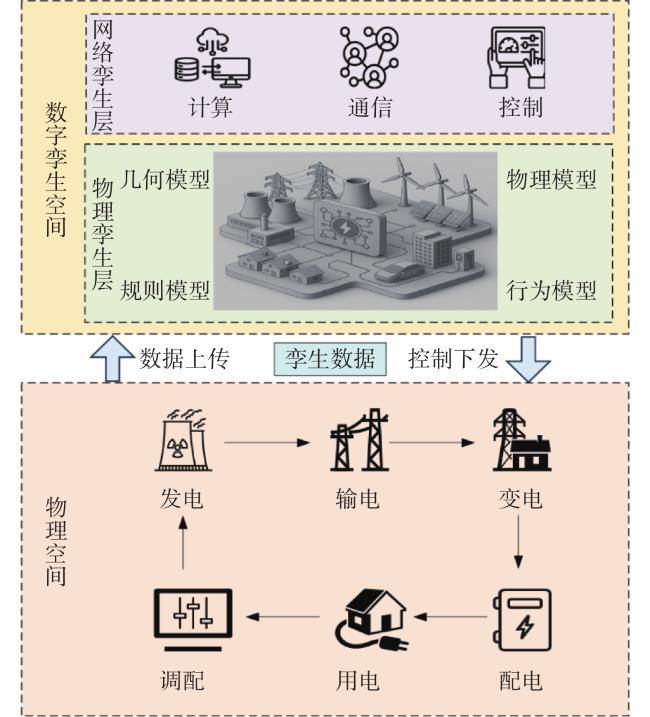
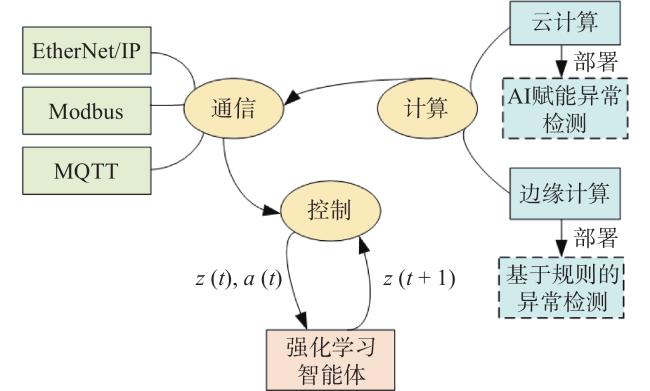
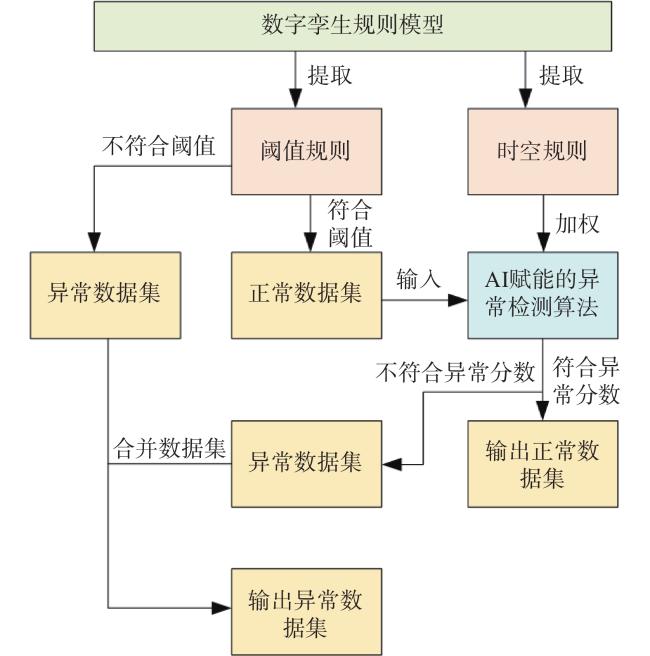
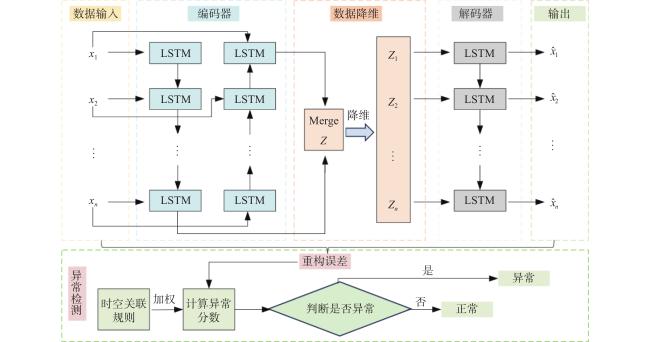
As power systems become deeply integrated with cyber-physical infrastructures, their security mechanisms encounter increasingly dynamic and complex threats. A digital twin–based architecture for power cyber-physical systems is proposed, where a digital twin is constructed to achieve real-time system-wide mirroring and multi-source heterogeneous data fusion. By continuously monitoring system operations and incorporating an AI-driven dynamic defense mechanism, the proposed framework enables effective anomaly detection in power system operations.To enhance detection efficiency and accuracy, a two-stage anomaly detection algorithm is introduced. In the first stage, threshold-based rules are employed for rapid identification of obvious anomalies, while in the second stage, an LSTM-AE(Long Short-Term Memory-Autoencoder)model combined with spatiotemporal association rules is applied to improve detection precision and adaptability. The proposed method is validated on a Simulink-based power system simulation platform under false data injection attacks. Experimental results demonstrate that the proposed algorithm achieves an anomaly detection accuracy of 97.82%, outperforming existing methods by 2%~4.5%. This approach significantly enhances the accuracy and robustness of anomaly detection, providing a strong safeguard for the secure and reliable operation of power systems.
Key words: digital twin; AI-powered; anomaly detection; rule-based model
Pu Runjie , Mao Jingzheng , Sun Yanbin , Li Mohan , Tian Zhihong . Anomaly detection techniques for power cyber-physical systems based on digital twins[J]. Journal of Cybersecurity, 2025 , 3(5) : 73 -83 . DOI: 10.20172/j.issn.2097-3136.250507
| 算法1 基于阈值规则的异常检测 |
| 输入 DT_Power系统中产生数据序列 输出 标记数据集 1.遍历数据序列中的变量 2.构建滑动时间窗口 3.计算该滑动时间窗口的统计特征 4. 结合 3σ 准则与规则模型的阈值条件,标记当前变量 5. 遍历结束后,标记数据序列 6. 根据标记将 7. 将正常数据集 |
| 算法2 规则加权的LSTM-AE异常检测 |
| 输入 算法1输出的正常数据集 输出 标记数据集 1. 构建重叠滑动窗口,划分窗口片段OWt; 2. 采用LSTM-AE模型的双向LSTM编码器,编码窗口片段OWt; 3. 采用LSTM-AE模型的单层LSTM解码器,重构原始窗口数据; 4. 基于重构误差Et,计算自适应阈值θt; 5. 将重构误差Et结合时空关联规则加权,计算异常得分St; 6. 基于异常得分St与自适应阈值θt,对原始数据进行异常标记。 |
表 1 不同异常检测算法效果对比Table 1 Comparison of the effectiveness of different anomaly detection methods |
| 异常检测算法 | 准确率 | 召回率 | F1分数 |
| CNN | 93.3% | 98.43% | 94.79% |
| GNN | 71.26% | 70.15% | 82.12% |
| GMM | 92.57% | 85.51% | 88.90% |
| LSTM | 94.31% | 96.15% | 95.75% |
| LSTM-AE | 95.77% | 97.09% | 96.59% |
| DT_LSTMAE | 97.82% | 97.70% | 98.37% |
| 1 |
Fang X, Misra S, Xue G L, et al. Smart grid: the new and improved power grid: a survey[J]. IEEE Communications Surveys & Tutorials, 2012, 14 (4): 944- 980.
|
| 2 |
Rehmani M H, Davy A, Jennings B, et al. Software defined networks-based smart grid communication: a comprehensive survey[J]. IEEE Communications Surveys & Tutorials, 2019, 21 (3): 2637- 2670.
|
| 3 |
Atalay M, Angin P. A digital twins approach to smart grid security testing and standardization[C]//Proceedings of the 2020 IEEE International Workshop on Metrology for Industry 4.0 & IoT. Piscataway: IEEE Press, 2020: 435-440.
|
| 4 |
Omitaomu O A, Niu H R. Artificial intelligence techniques in smart grid: a survey[J]. Smart Cities, 2021, 4 (2): 548- 568.
|
| 5 |
Suhail S, Malik S U R, Jurdak R, et al. Towards situational aware cyber-physical systems: a security-enhancing use case of blockchain-based digital twins[J]. Computers in Industry, 2022, 141, 103699.
|
| 6 |
Liu Y, Zhang Y N, Su S, et al. BlockSC: a blockchain empowered spatial crowdsourcing service in metaverse while preserving user location privacy[J]. IEEE Journal on Selected Areas in Communications, 2024, 42 (4): 880- 892.
|
| 7 |
Uddin M, Obaidat M, Manickam S, et al. Exploring the convergence of Metaverse, Blockchain, and AI: a comprehensive survey of enabling technologies, applications, challenges, and future directions[J]. WIREs Data Mining and Knowledge Discovery, 2024, 14 (6): e1556.
|
| 8 |
胡江, 孙国臣, 张加军, 等. 由“震网”病毒事件浅议核电站信息安全现状及监管[J]. 核科学与工程, 2015, 35 (1): 181- 185,192.
Hu J, Sun G C, Zhang J J, et al. The status quo and supervision of NPP information security from stuxnet attacks[J]. Nuclear Science and Engineering, 2015, 35 (1): 181- 185,192.
|
| 9 |
张涛, 费稼轩, 王琦, 等. 电力信息物理系统跨域攻击协同防御架构及机制研究[J]. 电子学报, 2024, 52 (4): 1205- 1218.
Zhang T, Fei J X, Wang Q, et al. Research of architecture and mechanism of coordinative defense methods for cross-domain attacks of cyber physical system[J]. Acta Electronica Sinica, 2024, 52 (4): 1205- 1218.
|
| 10 |
Sun Y B, Tian Z H, Li M H, et al. Honeypot identification in softwarized industrial cyber–physical systems[J]. IEEE Transactions on Industrial Informatics, 2021, 17 (8): 5542- 5551.
|
| 11 |
Zheng T, Liu M, Puthal D, et al. Smart grid: cyber attacks, critical defense approaches, and digital twin[PP]. arXiv preprint, 2022, 2205.11783.
|
| 12 |
Liu J, Xiao Y, Li S H, et al. Cyber security and privacy issues in smart grids[J]. IEEE Communications Surveys & Tutorials, 2012, 14 (4): 981- 997.
|
| 13 |
Jiang Z M, Lv H H, LI Y C, et al. A novel application architecture of digital twin in smart grid[J]. Journal of Ambient Intelligence and Humanized Computing, 2022, 13 (8): 3819- 3835.
|
| 14 |
Zhang Y Y, Ma C X, Luo J, et al. Application of digital twins in smart grids[C]//Proceedings of the 2022 IEEE 4th International Conference on Power, Intelligent Computing and Systems (ICPICS). Piscataway: IEEE Press, 2022: 74-79.
|
| 15 |
Olivares-rojas J C, Reyes-archundia E, Gutiérrez-gnecchi J A, et al. Towards cybersecurity of the smart grid using digital twins[J]. IEEE Internet Computing, 2022, 26 (3): 52- 57.
|
| 16 |
Ebrahimi A. Challenges of developing a digital twin model of renewable energy generators[C]//Proceedings of the 2019 IEEE 28th International Symposium on Industrial Electronics (ISIE). Piscataway: IEEE Press, 2019: 1059-1066.
|
| 17 |
Jafari M, Kavousi-fard A, CHEN T, et al. A review on digital twin technology in smart grid, transportation system and smart city: challenges and future[J]. IEEE Access, 2023, 11, 17471- 17484.
|
| 18 |
Hadar E, Kravchenko D, Basovskiy A. Cyber digital twin simulator for automatic gathering and prioritization of security controls’ requirements[C]//Proceedings of the 2020 IEEE 28th International Requirements Engineering Conference (RE). Piscataway: IEEE Press, 2020: 250-259.
|
| 19 |
Jbair M, Ahmad B, MAPLE C, et al. Threat modelling for industrial cyber physical systems in the era of smart manufacturing[J]. Computers in Industry, 2022, 137, 103611.
|
| 20 |
Suhail S, Jurdak R, Hussain R. Security attacks and solutions for digital twins[PP]. arXiv preprint, 2022, 2202.12501.
|
| 21 |
Saad A, Faddel S, Mohammed O. IoT-based digital twin for energy cyber-physical systems: design and implementation[J]. Energies, 2020, 13 (18): 4762.
|
| 22 |
Bitton R, Gluck T, Stan O, et al. Deriving a cost-effective digital twin of an ICS to facilitate security evaluation[C]//Computer Security. Cham: Springer, 2018: 533-554.
|
| 23 |
Vielberth M, Glas M, Dietz M, et al. A digital twin-based cyber range for SOC analysts[C]//Data and Applications Security and Privacy XXXV. Cham: Springer, 2021: 293-311.
|
| 24 |
Salvi A, Spagnoletti P, Noori N S. Cyber-resilience of critical cyber infrastructures: integrating digital twins in the electric power ecosystem[J]. Computers & Security, 2022, 112, 102507.
|
| 25 |
Xu H S, Wu J, Pan Q Q, et al. A survey on digital twin for industrial Internet of Things: applications, technologies and tools[J]. IEEE Communications Surveys & Tutorials, 2023, 25 (4): 2569- 2598.
|
| 26 |
Haghnegahdar L, Wang Y. A whale optimization algorithm-trained artificial neural network for smart grid cyber intrusion detection[J]. Neural Computing and Applications, 2020, 32 (13): 9427- 9441.
|
| 27 |
Wang Z H, He H B, Wan Z Q, et al. Coordinated topology attacks in smart grid using deep reinforcement learning[J]. IEEE Transactions on Industrial Informatics, 2021, 17 (2): 1407- 1415.
|
| 28 |
Liu Y N, Guan X, Li J, et al. Evaluating smart grid renewable energy accommodation capability with uncertain generation using deep reinforcement learning[J]. Future Generation Computer Systems, 2020, 110, 647- 657.
|
| 29 |
Zhang Y X, Yan J. Semi-supervised domain-adversarial training for intrusion detection against false data injection in the smart grid[C]//Proceedings of the 2020 International Joint Conference on Neural Networks (IJCNN). Piscataway: IEEE Press, 2020: 1-7.
|
| 30 |
Wei X Q, Wei J H, Yang Z, et al. A review on abnormal electricity consumption detection[C]//Proceedings of the 2025 CAA Symposium on Fault Detection, Supervision, and Safety for Technical Processes (SAFEPROCESS). Piscataway: IEEE Press, 2025: 1-6.
|
| 31 |
Peterson L, Gosea I V, Benner P, et al. Digital twins in process engineering: an overview on computational and numerical methods[J]. Computers & Chemical Engineering, 2025, 193, 108917.
|
| 32 |
Abdelnabi A B, Rabadi G. Real-time medical aid delivery: a digital twin approach with dynamic vehicle routing problem[C]//Proceedings of the 2025 IEEE 5th International Conference on Digital Twins and Parallel Intelligence (DTPI). Piscataway: IEEE Press, 2025: 1-6.
|
| 33 |
Jing Z, Wang Q, Chen Z R, et al. Optimization of energy acquisition system in smart grid based on artificial intelligence and digital twin technology[J]. Energy Informatics, 2024, 7 (1): 121.
|
| 34 |
Lei L, Shen G Q, Zhang L J, et al. Toward intelligent cooperation of UAV swarms: when machine learning meets digital twin[J]. IEEE Network, 2021, 35 (1): 386- 392.
|
| 35 |
Groshev M, Guimarães C, Martín-pérez J, et al. Toward intelligent cyber-physical systems: digital twin meets artificial intelligence[J]. IEEE Communications Magazine, 2021, 59 (8): 14- 20.
|
| 36 |
Cheng K, Wang B G, Shi Q X, et al. Research on the method of abnormal risk identification for urban electricity load method based on GMM clustering[C]//Proceedings of the 2025 10th International Conference on Communication, Image and Signal Processing (CCISP). Piscataway: IEEE Press, 2025: 230-234.
|
/
| 〈 |
|
〉 |