Cross-scenario child recognition technology based on human-computer interaction behavior
Online published: 2026-01-04
Copyright
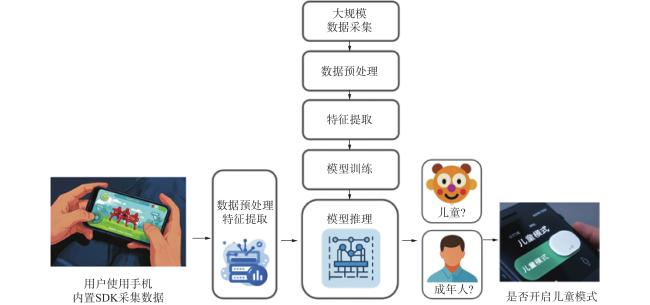
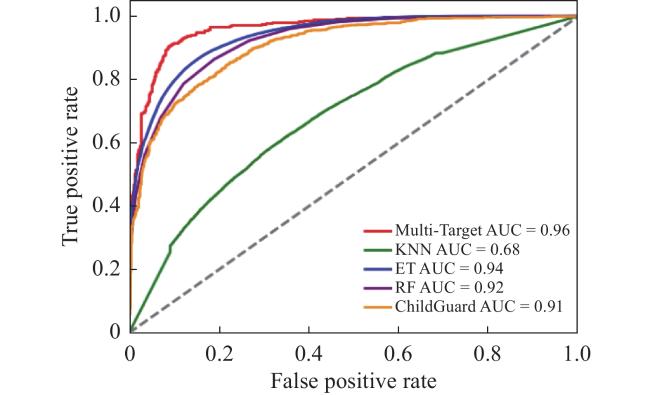
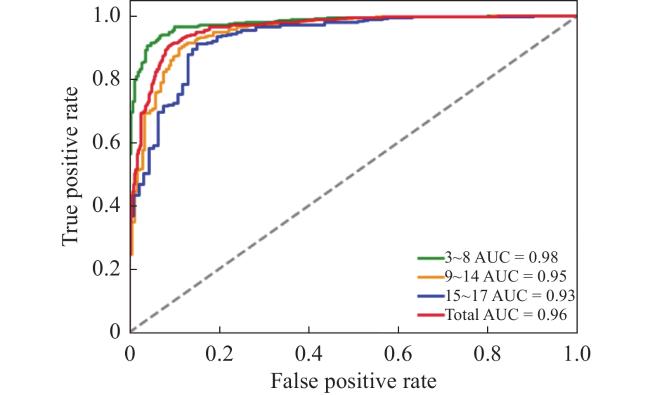
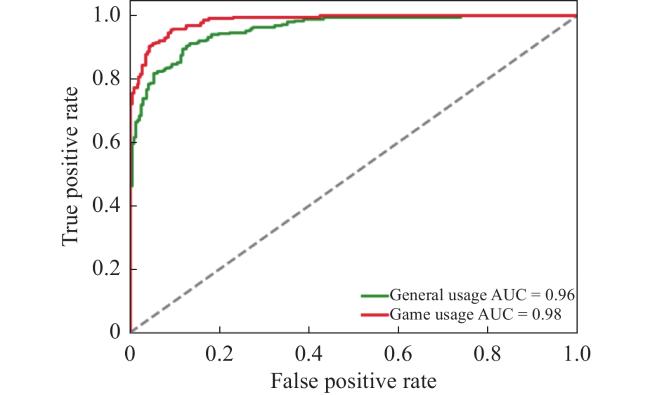
In recent years, the mobile Internet's rapid growth has made mobile smart terminals essential in daily life. With their widespread use, user age distribution has diversified. Problems like children's smartphone addiction, excessive online game recharges, and accidental info leakage from improper operations are now common social issues.Current regulatory efforts mainly rely on ID based identity verification, but children can evade it by using parents' info. Thus, identifying users' age groups during smartphone use to curb children's overuse is a pressing concern.To solve this, a large scale human-computer interaction dataset covering gaming and free use scenarios has been built. A cross-scenario agegroup recognition method based on multi-task learning is proposed to address children's smartphone addiction, achieving an equal error rate (EER) of 0.09 overall, and 0.06 for children under 13.
ZHAO Junyi , GAO Shuxin , SONG Tianle , ZHANG Chong , ZHAO Zhengyu , SHEN Chao , LIN Chenhao . Cross-scenario child recognition technology based on human-computer interaction behavior[J]. Journal of Cybersecurity, 2025 , 3(4) : 43 -52 . DOI: 10.20172/j.issn.2097-3136.250404
表 1 数据采集字段Table 1 Data collection fields |
| 字段 | 释义 |
| timeStamp | 时间戳 |
| screenRes | 手机屏幕分辨率 |
| screenOri | 手机方向 |
| tapX tapY | 触摸屏交互横纵坐标 |
| finger number | 手指编号 |
| acceX acceY acceZ | 加速度计传感器X、Y、Z轴读数 |
| size | 手指接触屏幕面积 |
| userID | 用户ID编号 |
| userAgeGroup | 用户年龄段 |
表 2 数据集统计信息Table 2 Dataset statistical information |
| 数据集 | 场景 | 儿童(3~8岁) | 儿童(9~14岁) | 儿童(15~17岁) | 成年人 | 合计 |
| 训练集 | 自由 | 303 | 532 | 190 | 975 | 2 000 |
| 游戏 | 245 | 473 | 247 | 1 025 | 1 990 | |
| 测试集 | 自由 | 181 | 52 | 29 | 238 | 500 |
| 游戏 | 66 | 120 | 63 | 250 | 499 |
表 3 特征信息Table 3 Feature information |
| 特征类别 | 描述 | 维度 |
| 位置时间 | 滑动起止点坐标、持续时长 | 5 |
| 滑动距离 | 触摸滑动轨迹长度、矢量长度及其数学统计值 | 12 |
| 滑动速度 | 触摸滑动轨迹速度、矢量速度及其数学统计值 | 12 |
| 加速度 | 触摸滑动加速度、数学统计值 | 12 |
| 角度 | 滑动轨迹与屏幕X轴夹角及其数学统计值 | 12 |
| 角速度 | 滑动夹角角度及其数学统计值 | 12 |
| 角加速度 | 滑动轨迹夹角角加速度及其数学统计值 | 12 |
| 传感器 | 加速度计三轴读数序列数据数学统计值 | 20 |
| 姿态角 | 俯仰角、偏航角、翻滚角 | 6 |
| 接触面积 | 手指触碰屏幕时的接触面积 | 2 |
| 最远距离点 | 滑动轨迹上最远距离点坐标、距离 | 3 |
| 数学统计值 | 以10次滑动动作为切片计算内部数学统计值 | 66 |
表 6 不同场景结果对比Table 6 Result comparison for different scenarios |
| 场景 | AUC | EER |
| 游戏 | 0.98 | 0.07 |
| 自由 | 0.96 | 0.11 |
表 7 不同场景滑动操作对比Table 7 Touch operation comparison for different scenarios |
| 场景 | 滑动时长/ms | 滑动轨迹长度/pixel | 滑动矢量长度/pixel |
| 游戏 | 1 428.93 | 1 877.48 | 681.37 |
| 自由 | 318.95 | 445.02 | 412.75 |
| 1 |
中国互联网络信息中心. 第48次中国互联网发展状况统计报告[EB/OL]. (2021-08-27)[2025-09-11]. http://wlaq.xjtu.edu.cn/48hlbg.pdf.
China Internet Network Information Center. The 48th statistical report on China’s internet development [EB/OL]. (2021-08-27) [2025-09-11]. http://wlaq.xj-tu.edu.cn/48hlbg.pdf.
|
| 2 |
CHEN L, YAN Z, TANG W, et al. Mobile phone addiction levels and negative emotions among Chinese young adults: The mediating role of interpersonal problems[J]. Computers in Human behavior, 2016, 55, 856- 866.
|
| 3 |
周景凡. 未成年人大额游戏充值行为研究[J]. 法制与经济, 2019 (4): 83- 85.
ZHOU J F. Research on minors’ large-amount game recharge behavior[J]. Legal System and Economy of China, 2019 (4): 83- 85.
|
| 4 |
BASARAN C, YOON H J, RA H K, et al. Classifying children with 3D depth cameras for enabling children’s safety applications[C]//Proceedings of the 2014 ACM International Joint Conference on Pervasive and Ubiquitous Computing. ACM, 2014: 343-347.
|
| 5 |
SAVCHENKO A V. Efficient facial representations for age, gender and identity recognition in organizing photo albums using multi-output ConvNet[J]. PeerJ Computer Science, 2019, 5, e197.
|
| 6 |
LI L, ZHAO X, XUE G. Unobservable re-authentication for smartphones [C]//Proceedings of the Network and Distributed System Security Symposium (NDSS). Internet Society, 2013, 56: 57-59.
|
| 7 |
联合国儿童基金会. 儿童权利公约[EB/OL]. (1990-09-02)[2025-09-11]. https: //www.unicef.org/child-rights-convention/convention-text.
United Nations Children’s Fund. Convention on the rights of the Child [EB/OL]. (1990-09-02) [2025-09-11]. https: //www.unicef.org/child-rights-convention/convention-text.
|
| 8 |
吴曼, 魏玉虾, 余灿清, 等. 中国 10 个地区成年人骨骼肌质量和手握力的描述性分析[J]. 中华流行病学杂志, 2019, 40 (4): 376- 381.
WU M, WEI Y X, YU C Q, et al. Descriptive analysis of skeletal muscle mass and handgrip strength among adults in 10 regions of China[J]. Chinese Journal of Epidemiology, 2019, 40 (4): 376- 381.
|
| 9 |
ANTHONY L, BROWN Q, NIAS J, et al. Interaction and recognition challenges in interpreting children’s touch and gesture input on mobile devices[C]//Proceedings of the 2012 ACM International Conference on Interactive Tabletops and Surfaces. ACM, 2012: 225-234.
|
| 10 |
ARIF A S, SYLLA C. A comparative evaluation of touch and pen gestures for adult and child users[C]//Proceedings of the 12th International Conference on Interaction Design and Children. ACM, 2013: 392-395.
|
| 11 |
VATAVU R D, CRAMARIUC G, SCHIPOR D M. Touch interaction for children aged 3 to 6 years: Experimental findings and relationship to motor skills[J]. International Journal of Human-Computer Studies, 2015, 74, 54- 76.
|
| 12 |
NACHER V, JAEN J, NAVARRO E, et al. Multi-touch gestures for pre-kindergarten children[J]. International Journal of Human-Computer Studies, 2015, 73, 37- 51.
|
| 13 |
ZHANG W, YU Z, XU E, et al. CHIP: A children identification system based on mobile phone sensory data[C]//2017 IEEE SmartWorld, Ubiquitous Intelligence & Computing, Advanced & Trusted Computed, Scalable Computing & Communications, Cloud & Big Data Computing, Internet of People and Smart City Innovation (SmartWorld/SCALCOM/UIC/ATC/CBDCom/IOP/SCI). IEEE, 2017: 1-8.
|
| 14 |
NGUYEN T, ROY A, MEMON N. Kid on the phone! Toward automatic detection of children on mobile devices[J]. Computers & Security, 2019, 84, 334- 348.
|
| 15 |
RASHED O, REXIN A, NASI M. Adult or child: Recognizing through touch gestures on smartphones[C]//2019 Digital Image Computing: Techniques and Applications (DICTA): IEEE, 2019: 1-8.
|
| 16 |
CHENG Y, JI X, LI X, et al. Identifying child users via touchscreen interactions[J]. ACM Transactions on Sensor Networks (TOSN), 2020, 16 (4): 1- 25.
|
| 17 |
LAGHARI A, MEMON Z A. Biometric authentication technique using smartphone sensor[C]//2016 13th International Bhurban Conference on Applied Sciences and Technology (IBCAST). IEEE, 2016: 381-384.
|
| 18 |
SHEN C, LI Y, CHEN Y, et al. Performance analysis of multi-motion sensor behavior for active smartphone authentication[J]. IEEE Transactions on Information Forensics and Security, 2018, 13 (1): 48- 62.
|
| 19 |
AMINI S, NOROOZI V, PANDE A, et al. Deepauth: A framework for continuous user re-authentication in mobile apps[C]//Proceedings of the 27th ACM International Conference on Information and Knowledge Management. ACM, 2018: 2027-2035.
|
| 20 |
HU H, LI Y, ZHU Z, et al. CNNAuth: Continuous authentication via two-stream convolutional neural networks[C]//2018 IEEE International Conference on Networking, Architecture and Storage (NAS). IEEE, 2018: 1-9.
|
| 21 |
LEYFER K, SPIVAK A. Continuous user authentication by the classification method based on the dynamic touchscreen biometrics[C]//2019 24th Conference of Open Innovations Association (FRUCT). IEEE, 2019: 228-234.
|
| 22 |
SONG Y, CAI Z. Integrating handcrafted features with deep representations for smartphone authentication[J]. Proceedings of the ACM on Interactive, Mobile, Wearable and Ubiquitous Technologies, 2022, 6 (1): 1- 27.
|
| 23 |
FRANK M, BIEDERT R, MA E, et al. Touchalytics: On the applicability of touchscreen input as a behavioral biometric for continuous authentication[J]. IEEE Transactions on Information Forensics and Security, 2012, 8 (1): 136- 148.
|
| 24 |
TANG H, LIU J, ZHAO M, et al. Progressive layered extraction (PLE): A novel multi-task learning (MTL) model for personalized recommendations[C]//Proceedings of the 14th ACM Conference on Recommender Systems. ACM, 2020: 269-278.
|
| 25 |
LIN C, SONG T, MIAO Y, et al. ChildShield: An implicit and continuous child identification system on smartphones[J]. IEEE Transactions on Dependable and Secure Computing, 2023, 21 (4): 2257- 2272.
|
/
| 〈 |
|
〉 |