Proof of privacy-preserving machine learning: a blockchain consensus mechanism with secure unsupervised learning process
Online published: 2025-07-18
Supported by
The National Key Research and Development Program of China (Grant No. 2022YFB2701400) (The National Natural Science Foundation of China (Grant No. 62132005, 62172162, 62172161)
Copyright
As the most popular blockchain consensus mechanism, proof of work (PoW) has no practical value other than determining miners' ledger accounting rights, wasting a lot of computing resources. Artificial intelligence, as an emerging technology, can mimic human intelligence features such as learning, reasoning, image recognition, and language understanding. Machine learning is an important method for achieving artificial intelligence by learning historical data to improve and optimize algorithm models so as to complete specific tasks. Unsupervised learning, as an important branch of machine learning, can discover hidden structures and patterns from unlabeled data. A blockchain energy-recycling consensus algorithm based on privacy preserving unsupervised learning was proposed to address the issue of wasted computing resources in PoW. In this scheme, miners and all nodes in the blockchain system performed clustering analysis and verification of clustering results based on the ciphertext dataset. Except the task requester, other nodes and servers in the system were unable to decrypt the original plaintext dataset. In order to improve the efficiency of clustering algorithm based ciphertext, a homomorphic encryption scheme without utilizing the public key was introduced, and a corresponding ciphertext calculation scheme was designed. The comparison of experimental results between this scheme and the plaintext scheme showed that there was only a negligible loss of accuracy between the privacy preserving clustering analysis results and the plaintext results with very similar clustering evaluation scores. This solution not only effectively solves the problem of mining power recovery, but also ensures the security of the dataset and the reliability of clustering results.
Key words: blockchain; consensus mechanism; unsupervised learning; privacy-preserving
HE Huilin , SHEN Jiachen , CAO Zhenfu , DONG Xiaolei . Proof of privacy-preserving machine learning: a blockchain consensus mechanism with secure unsupervised learning process[J]. Journal of Cybersecurity, 2025 , 3(2) : 59 -69 . DOI: 10.20172/j.issn.2097-3136.250206
| 算法 1:挖矿过程 |
输入:taskId任务id输出:B区块步骤: 1) 根据 2)输入 3)每轮迭代时,对于每个数据点 4)从 5)利用基于密文的均值计算方法,更新每个聚类的中心点为 6)迭代结束,根据任务信息提供的聚类评估算法,对聚类集合 |
| 算法2:验证过程 |
输入: 2)从 3)比较 |
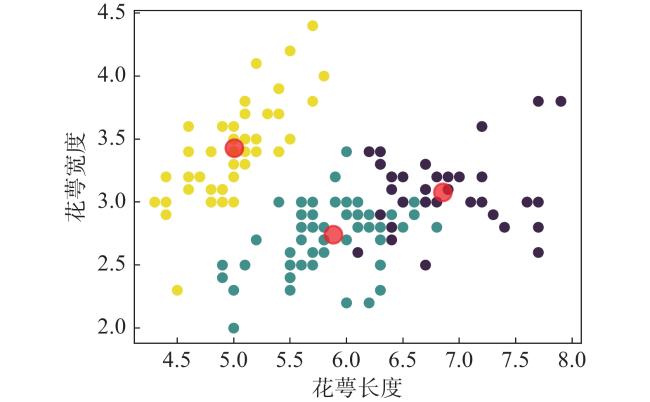
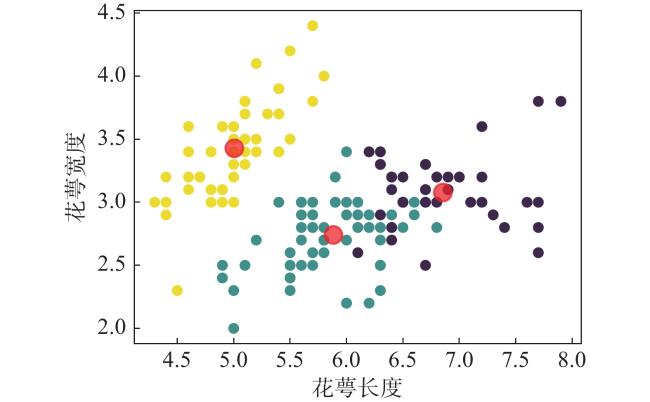
图 5 鸢尾花数据集上的k-Means聚类结果(明文)Fig.5 k-Means clustering results on Iris dataset (plaintext) |
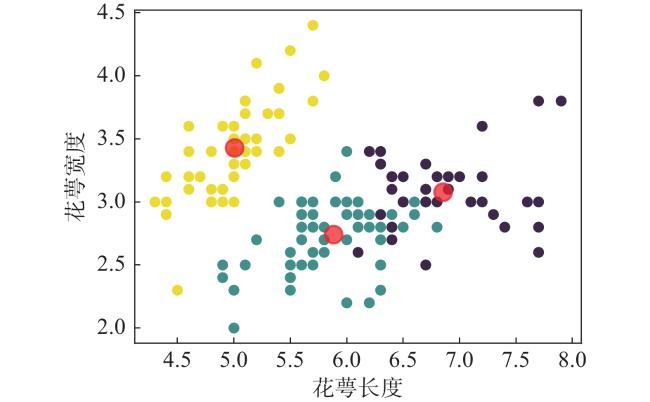
图 6 鸢尾花数据集上的k-Means聚类结果(PPPUL)Fig.6 k-Means clustering results on Iris dataset (PPPUL) |
表 1 聚类评估分数Table 1 Clustering evaluation score |
| 方案 | 评估方法 | ||
| DBI | RI | SC | |
| PPPUL | |||
| 明文 | |||
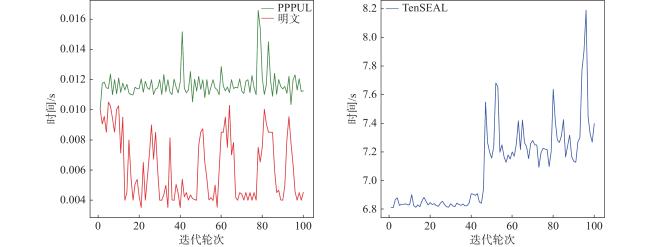
表 2 聚类评估时间Table 2 Clustering evaluation time |
| 方法 | DBI | RI | SC |
| 时间 / s | 0.006 | 0.009 | 1.872 |
| 1 |
NAKAMOTO S. Bitcoin: A Peer-to-Peer Electronic Cash SystemNakamoto S. Bitcoin: A Peer-to-Peer Electronic Cash System[EB/OL]. Bitcoin.org, (2008-08-21)[2024-06-17]. https://bitcoin.org/en/bitcoin-paper.
|
| 2 |
Digiconomist. Bitcoin energy consumption[EB/OL]. (2025-01-01)[2025-03-16]. https://digiconomist.net/bitcoin-energy-consumption.
|
| 3 |
BALL M, ROSEN A, SABIN M, et al. Proofs of useful work[Z]. IACR Cryptology ePrint Arch,2017:203.
|
| 4 |
KING S. Primecoin:Cryptocurrency with prime number proof-of-work[EB/OL]. (2013-07-07)[2025-03-16]. http://bravenewcoin.com.
|
| 5 |
LI B, CHENLI C, XU X, et al. DLBC: A deep learning-based consensus in blockchains for deep learning services[J]. arXiv preprint, arXiv:, 1904, 07349, 2019.
|
| 6 |
LIU Y, LAN Y, LI B, et al. Proof of Learning (PoLe): Empowering neural network training with consensus building on blockchains[J]. Computer Networks, 2021, 201, 108594.
|
| 7 |
WEI Y, AN Z, LENG S, et al. Evolved PoW: Integrating the matrix computation in machine learning into blockchain mining[J]. IEEE Internet of Things Journal, 2022, 10 (8): 6689- 6702.
|
| 8 |
HE H,SHEN J,CAO Z,et al. Proof of privacy-preserving machine learning:A blockchain consensus mechanism with secure deep learning process[C]//2024 IEEE International Conference on Blockchain (Blockchain). IEEE,2024:193-200.
|
| 9 |
CHENLI C,LI B,SHI Y,et al. Energy-recycling blockchain with proof-of-deep-learning[C]//2019 IEEE International Conference on Blockchain and Cryptocurrency (ICBC). IEEE,2019:19-23.
|
| 10 |
LI B,CHENLI C,XU X,et al. Exploiting computation power of blockchain for biomedical image segmentation[C]//Proceedings of the IEEE/CVF conference on computer vision and pattern recognition workshops. IEEE,2019:2802-2811.
|
| 11 |
CHENLI C,LI B,JUNG T. DLchain:Blockchain with deep learning as proof-of-useful-work[C]//Services-SERVICES 2020:16th World Congress,Held as Part of the Services Conference Federation,SCF 2020. Springer International Publishing,2020:43-60.
|
| 12 |
XIA Z,CAO Z,SHEN J,et al. Mining for better:An energy-recycling consensus algorithm to enhance stability with deep learning[C]//International Conference on Information Security Practice and Experience. Singapore:Springer Nature Singapore,2023:579-594.
|
| 13 |
ZHANG X,XU Z,CHENG H,et al. Secure collaborative learning in mining pool via robust and efficient verification[C]//2023 IEEE 43rd International Conference on Distributed Computing Systems (ICDCS). IEEE,2023:794-805.
|
| 14 |
QU X, WANG S, HU Q, et al. Proof of federated learning: A novel energy-recycling consensus algorithm[J]. IEEE Transactions on Parallel and Distributed Systems, 2021, 32 (8): 2074- 2085.
|
| 15 |
LI B, LU Q, JIANG W, et al. A collaboration strategy in the mining pool for proof-of-neural-architecture consensus[J]. Blockchain: Research and Applications, 2022, 3 (4): 100089.
|
| 16 |
ZHANG R,LIU J,DING Y,et al. “Adversarial examples” for proof-of-learning[C]//2022 IEEE Symposium on Security and Privacy (SP). IEEE,2022:1408-1422.
|
| 17 |
DWORK C, LEI J. Differential privacy and robust statistics[C/OL] // STOC’09 : Proceedings of the 41st Annual ACM Symposium on Theory of Computing. Association for Computing Machinery, 2009 : 371-380.
|
| 18 |
SWEENEY L. k-anonymity: A model for protecting privacy[J]. International Journal of Uncertainty, Fuzziness and Knowledge-based Systems, 2002, 10 (5): 557- 570.
|
| 19 |
RYFFEL T,POINTCHEVAL D,BACH F,et al. Partially encrypted deep learning using functional encryption[J]. Advances in Neural Information Processing Systems,2019(32):32-52.
|
| 20 |
PANZADE P,TAKABI D. Towards faster functional encryption for privacy-preserving machine learning[C]//2021 3rd IEEE International Conference on Trust,Privacy and Security in Intelligent Systems and Applications (TPS-ISA). IEEE,2021:21-30.
|
| 21 |
LEE J W,KANG H C,LEE Y,et al. Privacy-preserving machine learning with fully homomorphic encryption for deep neural network[J]. IEEE Access,2022,10:30039-30054.
|
| 22 |
AONO Y, HAYASHI T, WANG L, et al. Privacy-preserving deep learning via additively homomorphic encryption[J]. IEEE Transactions on Information Forensics and Security, 2017, 13 (5): 1333- 1345.
|
| 23 |
ZHOU J, CHEN S, CHOO K K R, et al. EPNS: Efficient privacy-preserving intelligent traffic navigation from multiparty delegated computation in cloud-assisted VANETs[J]. IEEE Transactions on Mobile Computing, 2021, 22 (3): 1491- 1506.
|
| 24 |
RAND W M. Objective criteria for the evaluation of clustering methods[J]. Journal of the American Statistical Association, 1971, 66 (336): 846- 850.
|
| 25 |
KAUFMAN L,ROUSSEEUW P J. An introduction to cluster analysis[M]. New York: John Wiley & Sons,Inc.,1990.
|
| 26 |
DAVIES D L, BOULDIN D W. A cluster separation measure[J]. IEEE Transactions on Pattern Analysis and Machine Intelligence, 1979, (2): 224- 227.
|
| 27 |
FLYMEN D V. The fastest way to learn how Blockchains work is to build one[M]. Apress, 2020. DOI:10.1007/978-1-4842-5171-3. ISBN:978-1-4842-5170-6.
|
| 28 |
FISHER R A. The use of multiple measurements in taxonomic problems[J]. Annals of Eugenics, 1936, 7 (2): 179- 188.
|
| 29 |
BENAISSA A, RETIAT B, CEBERE B, et al. TenSEAL: A library for encrypted tensor operations using homomorphic encryption[J]. arXiv preprint, arXiv:, 2104, 03152, 2021.
|
/
| 〈 |
|
〉 |