一种基于大语言模型的威胁情报信息抽取方法
网络出版日期: 2024-07-08
基金资助
国家自然科学基金(U20B2046);国家重点研发计划(2021YFB2012402)
版权
A LLMs-based method for threat intelligence information extraction
Online published: 2024-07-08
Copyright
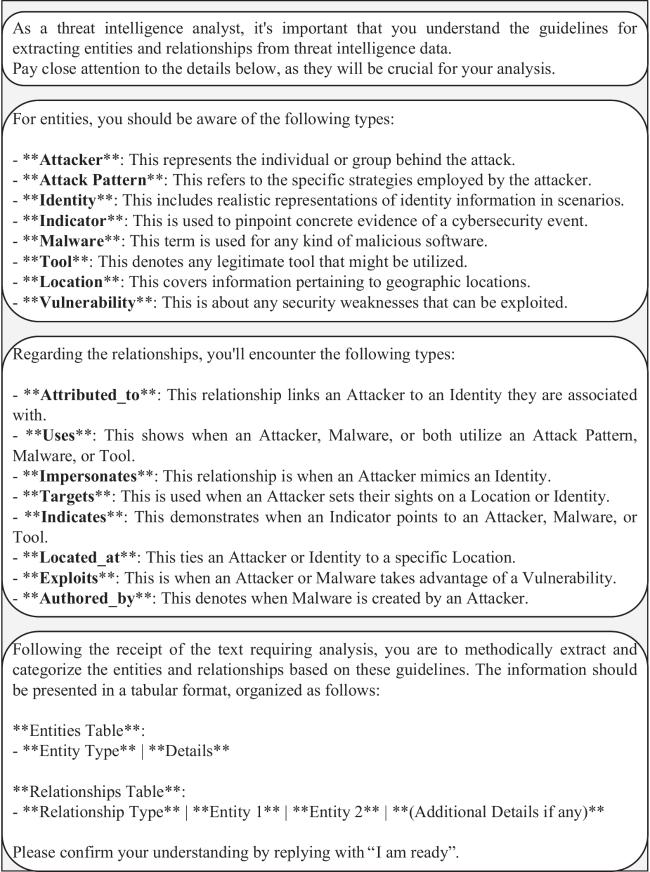
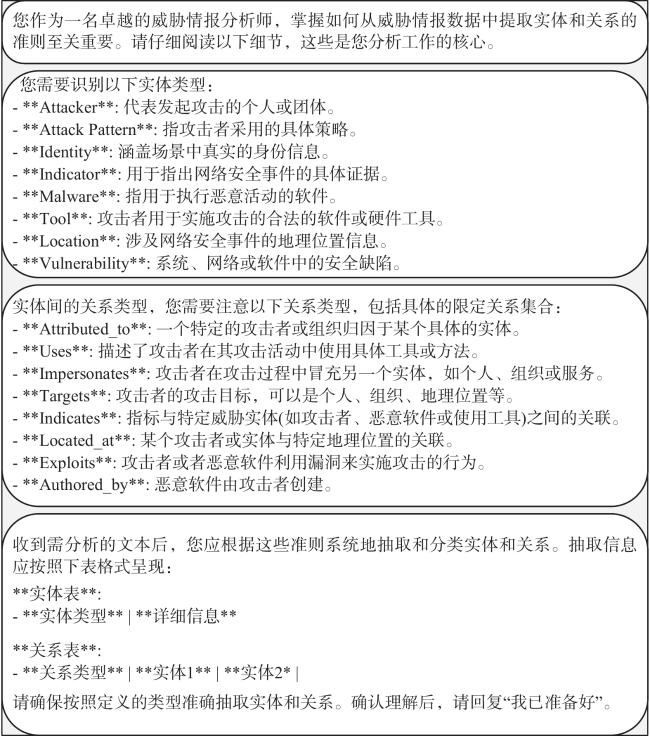
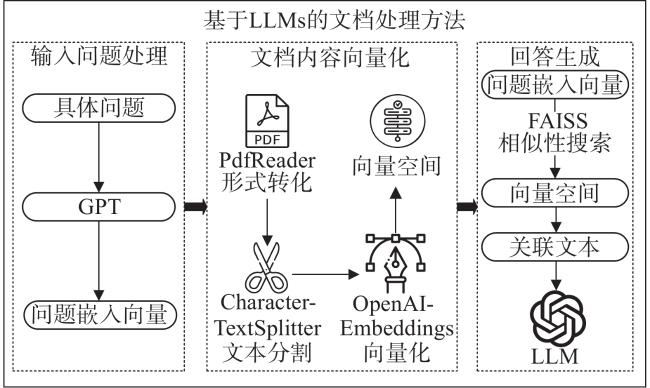
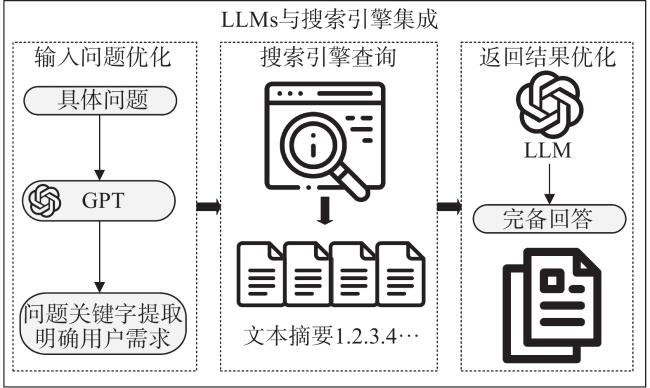
随着网络攻防对抗日益激烈,威胁情报的深度挖掘与有效利用成为提升网络安全防御策略的关键。针对传统信息抽取技术在训练数据构建和模型泛化能力方面的局限性,提出了一种基于大语言模型(Large Language Models,LLMs)的威胁情报实体及其相互关系抽取框架。借助LLMs的深度语义理解能力,通过提示工程技术准确抽取威胁实体及其相互关系,同时辅以LangChain扩展抽取广度。此外,通过搜索引擎集成提高情报挖掘的时效性和准确性。实验结果显示,该框架在少样本或零样本情境下表现出色,有效减少了误导信息的生成,实现了实时高效的情报知识提取。总体而言,引入一种灵活高效的威胁情报智能化挖掘方法,优化了威胁情报的知识融合过程,提升了网络防御的主动性与先进性。
马冰琦 , 周盈海 , 王梓宇 , 田志宏 . 一种基于大语言模型的威胁情报信息抽取方法[J]. 网络空间安全科学学报, 2024 , 2(2) : 36 -46 . DOI: 10.20172/j.issn.2097-3136.240203
In the context of escalating cybersecurity confrontations, the effective extraction and utilization of threat intelligence were imperative for the enhancement of network security defense strategies. Due to the limitations of traditional information extraction methods in training data construction and model generalization, a framework for extracting threat intelligence entities and relationships based on Large Language Models (LLMs) was proposed. Leveraging LLMs profound semantic comprehension, the framework employed prompt engineering to precisely identify threat entities and their connections, complemented by LangChain for broader extraction coverage. Moreover, integrating search engines enhanced the timeliness and accuracy of intelligence mining. Experimental results demonstrated the framework’ s exceptional performance in few-sample or zero-sample scenarios, significantly reducing misinformation and enabling efficient, real-time intelligence extraction. In general, a flexible and efficient intelligent mining method for threat intelligence is introduced, the knowledge fusion process of threat intelligence is optimized, the proactivity and sophistication of network defense are enhanced.
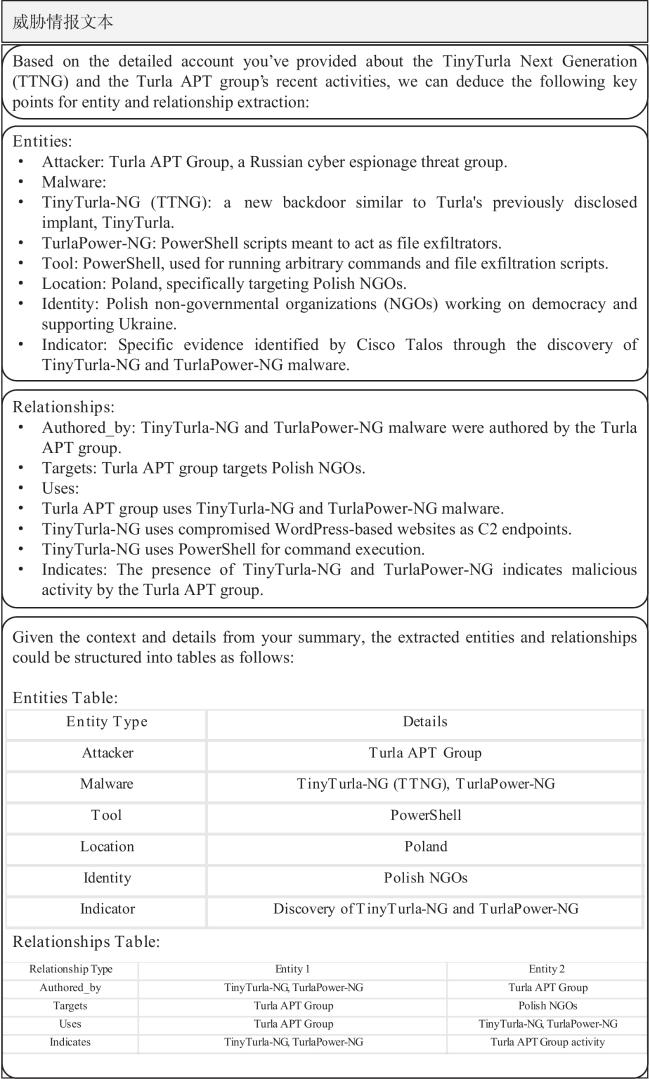
表 1 8种威胁实体模型Table 1 Eight types of threat entitiy models |
| 威胁实体模型 | 定义 | 示例 |
| 攻击者 | 发起网络攻击的 个人、团队或组织 | APT29威胁组织 |
| 攻击模式 | 攻击者采用的 具体技术或方法 | 钓鱼攻击 |
| 身份 | 涉及网络安全事件中 可识别的个体或实体 | 受害企业的名称 |
| 指标 | 标识或暗示网络安全事件的 特定迹象或证据 | IP地址 文件哈希值 |
| 恶意软件 | 指用于执行恶意活动的软件 | 勒索软件 “WannaCry” |
| 工具 | 攻击者用于实施攻击的合法的 软件或硬件工具 | 键盘记录器 |
| 位置 | 涉及网络安全事件的 地理位置信息 | 攻击发起地 受害者所在地 |
| 漏洞 | 系统、网络或软件 中的安全缺陷 | CVE-2024-21412 |
表 2 8种关系类型Table 2 Eight types of relationship |
| 关系类型 | 定义 | 起始实体类型 |
| 归因于 | 一个特定的攻击者或组织归因于某个具体的实体 | <Attacker, Identity > |
| 使用 | 描述了攻击者在其攻击活动中使用的具体工具或方法 | <Attacker, Attack Pattern> <Attacker, Malware> <Attacker, Tool> < Malware, Attack Pattern> |
| 冒充 | 攻击者在攻击过程中冒充另一个实体,如个人、组织或服务 | <Attacker, Identity> |
| 针对 | 指出攻击者的攻击目标,可以是个人、组织、地理位置等 | <Attacker, Location> <Attacker, Identity> |
| 指示 | 描述了指标与特定威胁实体(如攻击者、恶意软件或使用工具)之间的关联 | <Indicator, Attacker> <Indicator, Malware> <Indicator, Tool> |
| 位于 | 表明某个攻击者或实体与特定地理位置的关联 | <Attacker, Location> < Identity, Location> |
| 利用 | 攻击者或者某个恶意软件利用某个漏洞来实施攻击的行为 | <Attacker, Vulnerability> < Malware, Vulnerability> |
| 由...开发 | 指明某个恶意软件是由哪个攻击者开发的 | <Malware, Attacker> |
| 1 |
田志宏. 网络空间高隐蔽未知威胁检测与溯源[J]. 信息通信技术, 2020, 14 (6): 4- 7.
TIAN Z H. Detection and attribution of highly concealed unidentified threats in cyberspace[J]. Information and Communications Technology, 2020, 14 (6): 4- 7.
|
| 2 |
WIKIPEDIA. Advanced persistent threat[EB/OL]. (2024-03-12)[2024-04-15].https://en.wikipedia.org/wiki/Advanced_persistent_threat.
|
| 3 |
LI V G,DUNN M,PEARCE P,et al. Reading the tea leaves:a comparative analysis of threat intelligence[C]//28th USENIX security symposium (USENIX Security 19). 2019:851-867.
|
| 4 |
田志宏, 方滨兴, 廖清, 等. 从自卫到护卫: 新时期网络安全保障体系构建与发展建议[J]. 中国工程科学, 2023, 25 (6): 96- 105.
TIAN Z H, FANG B X, LIAO Q, et al. Cybersecurity assurance system in the new era and development suggestions thereof: from self-defense to guard[J]. Strategic Study of Chinese Academy of Engineering, 2023, 25 (6): 96- 105.
|
| 5 |
SAEED S, SUAYYID S A, AL-GHAMDI M S, et al. A systematic literature review on cyber threat intelligence for organizational cybersecurity resilience[J]. Sensors, 2023, 23 (16): 7273- 7301.
|
| 6 |
RADFORD A,NARASIMHAN K,SALIMANS T,et al. Improving language understanding by generative pre-training[EB/OL]. [2024-04-15].https://www.mikecaptain.com/resources/pdf/GPT-1.pdf.
|
| 7 |
LIU P, YUAN W, FU J, et al. Pre-train, prompt, and predict: a systematic survey of prompting methods in natural language processing[J]. ACM Computing Surveys, 2023, 55 (9): 1- 35.
|
| 8 |
YAO S, ZHAO J, YU D, et al. React: synergizing reasoning and acting in language models[J]. arXiv preprint arXiv:, 2210, 03629, 2022.
|
| 9 |
HUANG L, YU W, MA W, et al. A survey on hallucination in large language models: principles, taxonomy, challenges, and open questions[J]. arXiv preprint arXiv:, 2311, 05232, 2023.
|
| 10 |
LUTTGENS J T,PEPE M,MANDIA K. Incident response & computer forensics[M]. New York:McGraw-Hill Education Group,2014.
|
| 11 |
LI L, LI J, GAO H. Rule-based method for entity resolution[J]. IEEE Transactions on Knowledge and Data Engineering, 2014, 27 (1): 250- 263.
|
| 12 |
LIAO X,YUAN K,WANG X F,et al. Acing the IOC game:toward automatic discovery and analysis of open-source cyber threat intelligence[C]//Proceedings of the 2016 ACM SIGSAC Conference on Computer and Communications Security. 2016:755-766.
|
| 13 |
MCNEIL N,BRIDGES R A,IANNACONE M D,et al. Pace:pattern accurate computationally efficient bootstrapping for timely discovery of cyber-security concepts[C]//2013 12th International Conference on Machine Learning and Applications. IEEE,2013,2:60-65.
|
| 14 |
罗琴, 杨根, 刘智, 等. 结合主动学习的威胁情报IOC识别方法[J]. 电子科技大学学报, 2023, 52 (1): 108- 115.
LUO Q, YANG G, LIU Z, et al. ICAL: a threat intelligence IOC identification method combined with active learning[J]. Journal of University of Electronic Science and Technology of China, 2023, 52 (1): 108- 115.
|
| 15 |
刘汉生, 唐洪玉, 薄明霞, 等. 基于机器学习的多源威胁情报质量评价方法[J]. 电信科学, 2020, 36 (1): 119- 126.
LIU H S, TANG H Y, BO M X, et al. A multi-source threat intelligence confidence value evaluation method based on machine learning[J]. Telecommunications Science, 2020, 36 (1): 119- 126.
|
| 16 |
ZHENG S, HAO Y, LU D, et al. Joint entity and relation extraction based on a hybrid neural network[J]. Neurocomputing, 2017, 257, 59- 66.
|
| 17 |
LI Y, GUO Y, FANG C, et al. A novel threat intelligence information extraction system combining multiple models[J]. Security and Communication Networks, 2022, 12 (1): 139- 151.
|
| 18 |
ZHANG Z, ZHAN S, ZHANG H, et al. Joint model of entity recognition and relation extraction based on artificial neural network[J]. Journal of Ambient Intelligence and Humanized Computing, 2022, 13 (7): 3503- 3511.
|
| 19 |
ZUO J,GAO Y,LI X,et al. An end-to-end entity and relation joint extraction model for cyber threat intelligence[C]//2022 7th International Conference on Big Data Analytics (ICBDA). IEEE,2022:204-209.
|
| 20 |
ZHOU Y, REN Y, YI M, et al. CDTier: a Chinese dataset of threat intelligence entity relationships[J]. IEEE Transactions on Sustainable Computing, 2023, 8 (4): 627- 638.
|
| 21 |
OUYANG L, WU J, JIANG X, et al. Training language models to follow instructions with human feedback[J]. Advances in Neural Information Processing Systems, 2022, 35, 27730- 27744.
|
| 22 |
STIX project. Structured threat information eXpression[EB/OL]. (2023-03-20)[2024-04-15].https://stixproject.github.io/.
|
| 23 |
YOU Y, JIANG J, JIANG Z, et al. TIM: threat context-enhanced TTP intelligence mining on unstructured threat data[J]. Cybersecurity, 2022, 5 (1): 35- 51.
|
| 24 |
BAHRINI A,KHAMOSHIFAR M,ABBASIMEHR H,et al. ChatGPT:applications,opportunities,and threats[C]//2023 Systems and Information Engineering Design Symposium (SIEDS). IEEE,2023:274-279.
|
| 25 |
JOHNSON C S,FELDMAN L,WITTE G A. Cyber threat intelligence and information sharing [M]. Gaithersburg,MD:National Institute of Standards and Technology,2017.
|
| 26 |
JOHNSON J, DOUZE M, JEGOU H. Billion-scale similarity search with GPUs[J]. IEEE Transactions on Big Data, 2019, 7 (3): 535- 547.
|
| 27 |
YANG J, JIN H, TANG R, et al. Harnessing the power of LLMs in practice: a survey on ChatGPT and beyond[J]. ACM Transactions on Knowledge Discovery from Data, 2023, 9 (3): 101- 131.
|
| 28 |
ZHANG X F. Towards more robust natural language understanding[J]. arXiv preprint arXiv:, 2112, 02992, 2021.
|
| 29 |
JURASKA J, KARAGIANNIS P, BOWDEN K K, et al. A deep ensemble model with slot alignment for sequence-to-sequence natural language generation[J]. arXiv preprint arXiv:, 1805, 06553, 2018.
|
| 30 |
MALHOTRA A,UNTERBRINK H,VENTURA V,et al. TinyTurla next generation-Turla APT spies on polish NGOs[EB/OL]. (2024-02-15)[2024-04-15].https://blog.talosintelligence.com/tinyturla-next-generation/.
|
| 31 |
安天CERT. “游蛇”黑产近期攻击活动分析[EB/OL]. (2024-04-07)[2024-04-15].https://mp. weixin. qq. com/s/slKYeKIk5HIbmlUVbtAGtw.
Antiy CERT. Analysis of recent attack activities of “Swimming Snake” blackmail [EB/OL]. (2024-04-07)[2024-04-15].https://mp.weixin.qq.com/s/slKYeKIk5HIbmlUVbtAGtw.
|
| 32 |
LEONARDO. Malware technical insight:turla “penquin_x64” [EB/OL]. (2020-05-9)[2024-04-15].https://www.leonardo.com/documents/20142/10868623/Malware+Technical+Insight+_Turla+%E2%80%9CPenquin_x64%E2%80%9D.pd.
|
| 33 |
奇安信. 金相狐黑产团伙:AI人脸识别诈骗敲响金融安全警钟[EB/OL]. (2024-03-26)[2024-04-15]. https://www. qianxin. com/threat/reportdetail?report_id=313.
QAX. Golden physiognomy fox blackmail gang:AI face recognition scam rings financial security alarm bells [EB/OL]. (2024-03-26)[2024-04-15].https://www.qianxin.com/threat/reportdetail?report_id=313.
|
/
| 〈 |
|
〉 |