大语言模型的安全与隐私保护技术研究进展
网络出版日期: 2024-05-18
基金资助
国家自然科学基金(62020106013);四川省科技厅项目(2023ZYD0142)
版权
Advances in security and privacy−preserving techniques for large language models
Online published: 2024-05-18
Copyright
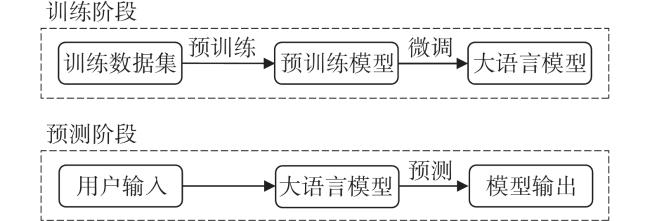
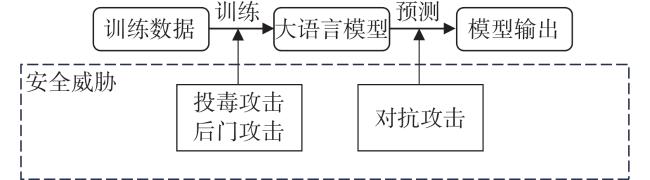
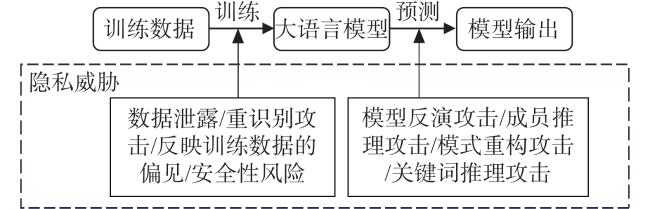
大语言模型作为具有优秀自然语言处理能力的人工智能模型,在医疗、金融、法律等领域广泛应用。随着大语言模型的不断发展、推广及应用,与之相关的安全和隐私问题受到各界越来越多的关注。首先介绍了大语言模型的相关背景,并从敌手目标、敌手知识和敌手能力3个方面对敌手模型进行了刻画。随后总结了大语言模型常见的安全威胁,如训练阶段的投毒攻击和后门攻击、预测阶段的对抗攻击,以及应对的防御方法,如提前结束模型训练、利用困惑度识别投毒样本等。接着总结了大语言模型常见的隐私威胁,如训练数据泄露、模型反演攻击、成员推理攻击等,并给出相应的隐私保护技术,如差分隐私、安全多方计算等。最后提出了目前还未解决的问题与未来的发展方向。
牟奕洋 , 陈涵霄 , 李洪伟 . 大语言模型的安全与隐私保护技术研究进展[J]. 网络空间安全科学学报, 2024 , 2(1) : 40 -49 . DOI: 10.20172/j.issn.2097-3136.240103
Large language models, as artificial intelligence models with excellent natural language processing capabilities, are widely used in health care, finance, law and other fields. With the continuous development of large language models, it raises a growing concern regarding security and privacy issues, which has garnered increasing attention from researchers. First of all, the relevant background of large language models was introduced and the adversary model was described from three aspects of adversary goals, adversary knowledge and adversary capabilities. Secondly, common security threats to large language models, such as poisoning attacks, backdoor attacks, and adversarial attacks, along with corresponding defense methods like early stopping and identifying poisoned examples through perplexity analysis were summarized. Moving on, common privacy threats to large language models, which encompass direct data leakage during training, model inversion attacks, and membership inference attacks were summarized. Present privacy-preserving techniques, such as differential privacy and secure multi-party computation, that could mitigate these threats were given. In conclusion, the persisting challenges and outline future development directions in this domain were proposed.
表 2 大语言模型中常见的隐私威胁Table 2 Common privacy threats in large language models |
| 阶段 | 敌手策略 | 敌手目标 | 敌手能力 | 敌手知识 |
| 训练阶段 | 窃取训练数据 | 机密性 | 获取模型训练数据 | 有限知识 |
| 预测阶段 | 模型反演攻击 | 机密性 | 提取训练数据 | 黑盒 |
| 成员推理攻击 | 机密性 | 访问目标模型 | 黑盒 | |
| 模式重构攻击 | 机密性 | 访问目标模型 | 黑盒 | |
| 关键词推理攻击 | 机密性 | 访问目标模型 | 黑盒/白盒 |
| 1 |
NATH S, MARIE A, ELLERSHAW S, et al. New meaning for NLP: the trials and tribulations of natural language processing with GPT-3 in ophthalmology[J]. British Journal of Ophthalmology, 2022, 106 (7): 889- 892.
|
| 2 |
HENDY A, ABDELREHIM M, SHARAF A, et al. How good are GPT models at machine translation? A comprehensive evaluation[J]. arXiv preprint arXiv:, 2302, 09210v1, 2023.
|
| 3 |
LIAO Y, WANG Y S, LIU Q, et al. GPT-based generation for classical Chinese poetry[J]. arXiv preprint arXiv:, 1907, 00151v5, 2019.
|
| 4 |
WU C F, YIN S M, QI W Z, et al. Visual ChatGPT: talking, drawing and editing with visual foundation models[J]. arXiv preprint arXiv:, 04671v1, 2023.
|
| 5 |
CHEN X Y, LIU C, LI B, et al. Targeted backdoor attacks on deep learning systems using data poisoning[J]. arXiv preprint arXiv:, 1712, 05526v1, 2017.
|
| 6 |
KURITA K,MICHEL P,NEUBIG G. Weight poisoning attacks on pre-trained models[C]//The 58th Annual Meeting of the Association for Computational Linguistics,2020:2793-2806.
|
| 7 |
WALLACE E,ZHAO T Z,FENG S,et al. Concealed data poisoning attacks on NLP models[C]//The 2021 Conference of the North American Chapter of the Association for Computational Linguistics:Human Language Technologies,2021:139-150.
|
| 8 |
CHEN K J, MENG Y X, SUN X F, et al. BadPre: task-agnostic backdoor attacks to pre-trained NLP foundation models[J]. arXiv preprint arXiv:, 2110, 02467v1, 2021.
|
| 9 |
QI F C,CHEN Y Y,L M K,et al. ONION:a simple and effective defense against textual backdoor attacks[C]//The 2021 Conference on Empirical Methods in Natural Language Processing,2021:9558-9566.
|
| 10 |
YAN J, GUPTA V, REN X. BITE: textual backdoor attacks with iterative trigger injection[J]. arXiv preprint arXiv:, 2205, 12700v3, 2023.
|
| 11 |
ZHAO S,WEN J M,TUAN L A,et al. Prompt as triggers for backdoor attack:examining the vulnerability in language models[C]//The 2023 Conference on Empirical Methods in Natural Language Processing,2023:12303-12317.
|
| 12 |
JIN D,JIN J Z,ZHOU T Y,et al. Is bert really robust? A strong baseline for natural language attack on text classification and entailment[C]//The AAAI Conference on Artificial Intelligence,2019:8018-8025.
|
| 13 |
REN S H,DENG Y H,HE K,et al. Generating natural language adversarial examples through probability weighted word saliency[C]//The 57th Annual Meeting of the Association for Computational Linguistics,2019:1085-1097.
|
| 14 |
LI J F,JI S L,DU T Y,et al. TextBugger:generating adversarial text against real-world applications[C]//The 26th Annual Network and Distributed System Security Symposium,2019.
|
| 15 |
LI L Y,MA R T,GUO Q P,et al. BERT-ATTACK:adversarial attack against bert using bert[C]//The 2020 Conference on Empirical Methods in Natural Language Processing,2020:6193-6202.
|
| 16 |
BOUCHER N,SHUMAILOV I,ANDERSON R,et al. Bad characters:imperceptible NLP attacks[C]//2022 IEEE Symposium on Security and Privacy (SP),2022:1987-2004.
|
| 17 |
CHEN Y Y,GAO H C,CUI G Q,et al. Why should adversarial perturbations be imperceptible? Rethink the research paradigm in adversarial NLP[C]//The 2022 Conference on Empirical Methods in Natural Language Processing,2022:11222-11237.
|
| 18 |
LIU X D, CHENG H, HE P C, et al. Adversarial training for large neural language models[J]. arXiv preprint arXiv:, 2004, 08994v2, 2020.
|
| 19 |
FREDRIKSON M,JHA S,RISTENPART T. Model inversion attacks that exploit confidence information and basic countermeasures[C]//The 22nd ACM SIGSAC Conference on Computer and Communications Security,2015:1322-1333.
|
| 20 |
MIRESHGHALLAH F,GOYAL K,UNIYAL A,et al. Quantifying privacy risks of masked language models using membership inference attacks[C]//The 2022 Conference on Empirical Methods in Natural Language Processing,2022:8332-8347.
|
| 21 |
PAN X D,ZHANG M,JI S L,et al. Privacy risks of general-purpose language models[C]//IEEE Symposium on Security and Privacy,2020:1314-1331.
|
| 22 |
ZHANG C Y, IPPOLITO D, LEE K, et al. Counterfactual memorization in neural language models[J]. arXiv preprint arXiv:, 2112, 12938v1, 2021.
|
| 23 |
CARLINI N, IPPOLITO D, JAGIELSKI M, et al. Quantifying memorization across neural language models[J]. arXiv preprint arXiv:, 2202, 07646v3, 2023.
|
| 24 |
CARLINI N,LIU C,ERLINGSSON Ú,et al. The secret sharer:evaluating and testing unintended memorization in neural networks[C]//The 28th USENIX Conference on Security Symposium,2019:267-284.
|
| 25 |
MAJMUDAR J,DUPUY C,PERIS C,et al. Differentially private decoding in large language models[C]//NAACL 2022 Second Workshop on Trustworthy Natural Language Processing (TrustNLP),2022.
|
| 26 |
LI X C, TRAMÈR F, LIANG P, et al. Large language models can be strong differentially private learners[J]. arXiv preprint arXiv:, 2110, 05679v6, 2022.
|
| 27 |
HAO M,LI H W,CHEN H X,et al. Iron:private inference on transformers[C]//The 36th Conference on Neural Information Processing Systems,2022.
|
| 28 |
HOU X Y,LIU J,LI J Y,et al. CipherGPT:secure two-party GPT inference[J]. Cryptology ePrint Archive Preprint,2023.
|
| 29 |
BAUM C,BRAUN L,MUNCH-HANSEN A,et al. MozZ2 k arella:efficient vector-OLE and zero-knowledge proofs over Z2 k [C]//The 42th Annual International Cryptology Conference,2022:329-358.
|
| 30 |
DONG Y, LU W J, ZHENG Y C, et al. PUMA: secure inference of LLaMA-7B in five minutes[J]. arXiv preprint arXiv:, 2307, 12533, 2023.
|
| 31 |
MOHASSEL P,RINDAL P. ABY3:a mixed protocol framework for machine learning[C]//The 2018 ACM SIGSAC Conference on Computer and Communications Security,2018:35-52.
|
| 32 |
KANDPAL N,WALLACE E,RAFFEL C. Deduplicating training data mitigates privacy risks in language models[C]//The 39th International Conference on Machine Learning,2022.
|
| 33 |
LEE K,IPPOLITO D,NYSTROM A,et al. Deduplicating training data makes language models better[C]//The 60th Annual Meeting of the Association for Computational Linguistics,2022:8424-8445.
|
/
| 〈 |
|
〉 |