面向自动驾驶安全的车载毫米波雷达鬼影目标去除方法
网络出版日期: 2026-05-21
基金资助
国家资助博士后科研计划(GZC20241660)
版权
Ghost target removal method for automotive millimeter-wave radar in autonomous driving safety
Online published: 2026-05-21
Copyright
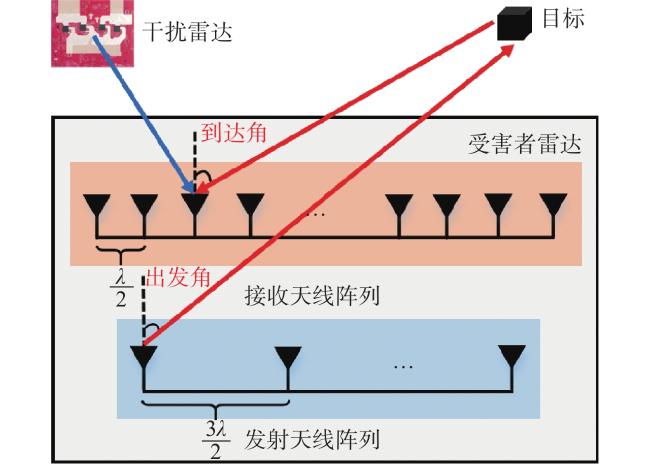
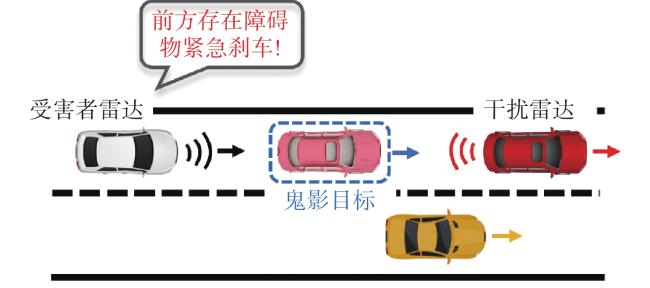
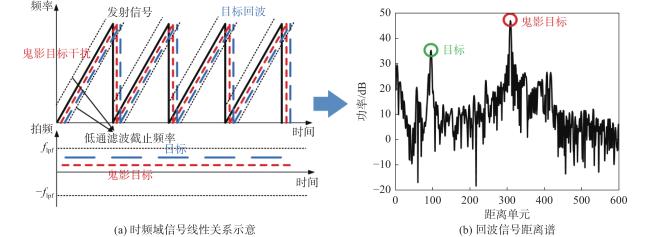
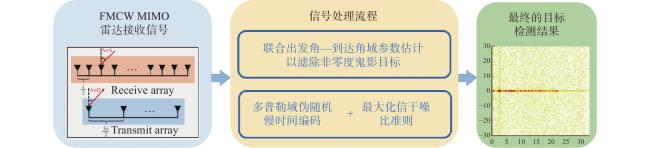
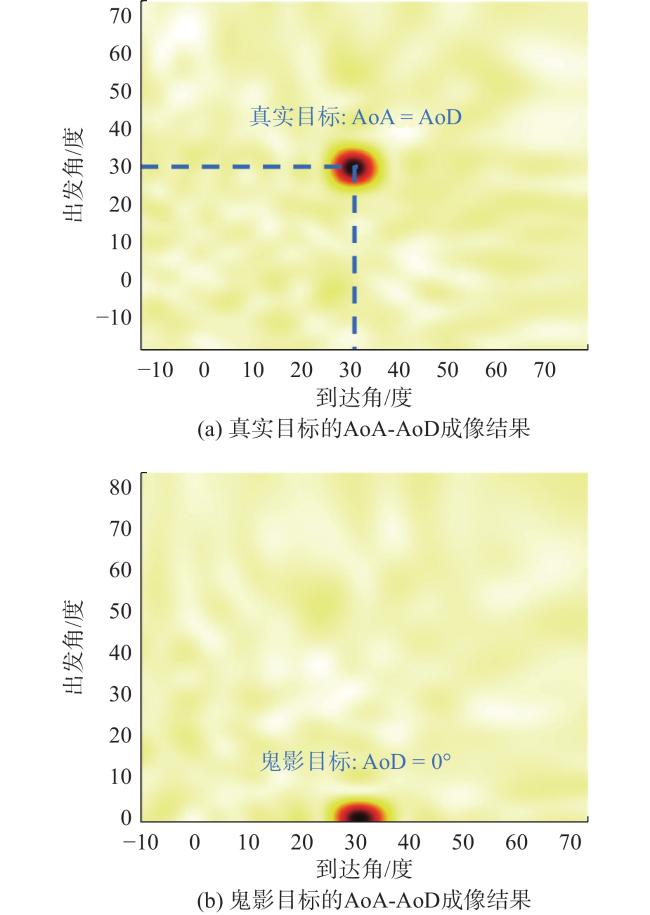
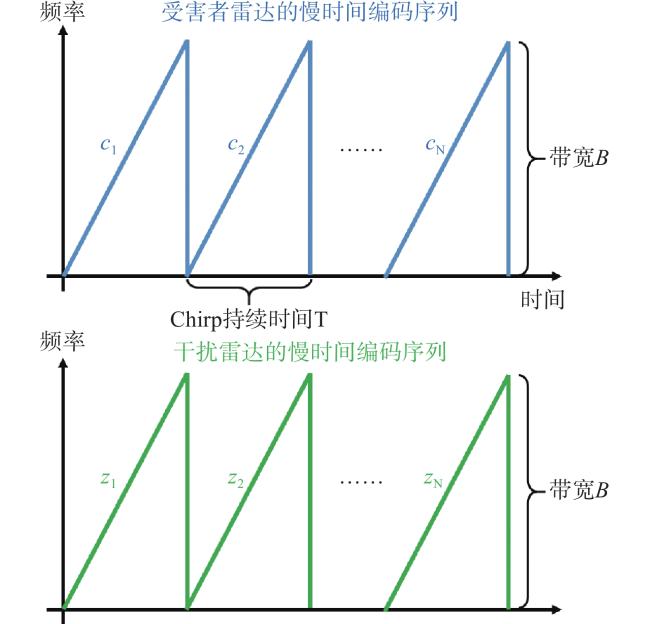
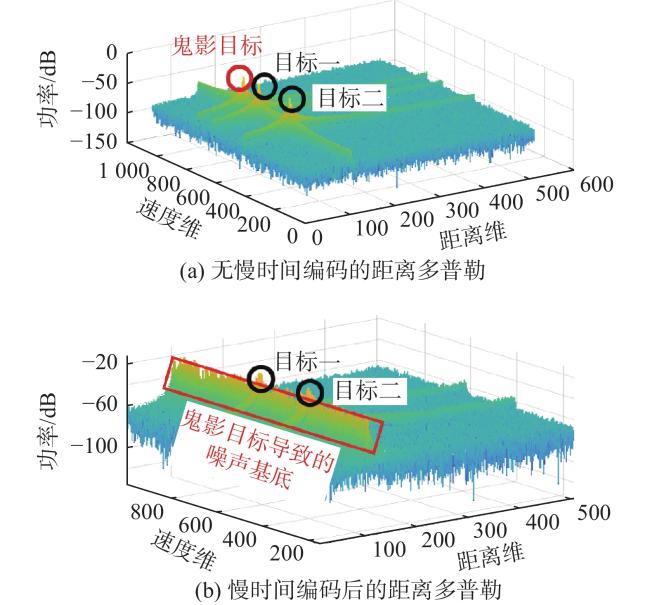
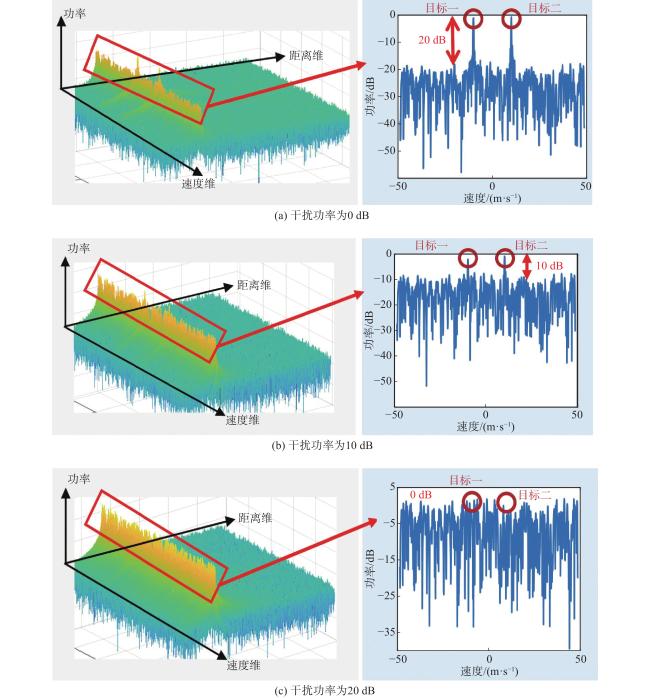
车载毫米波雷达由于其成本较低、不受光照、烟雾等恶劣环境影响的特点,在自动驾驶中得到广泛应用。然而,随着道路上车载雷达数量的增多以及频谱资源(77~81GHz)的稀缺性日益凸显,雷达间的相互干扰问题变得愈发严重。所产生的鬼影目标会降低雷达的灵敏度,显著提升虚警概率,从而严重威胁自动驾驶安全。针对这一问题,本文提出一种联合出发角—到达角—多普勒信息的多域联合鬼影目标去除方法。核心发现在于,干扰信号与目标回波存在非对称传播特性,即目标回波为往返传播,而干扰信号为单程传播。首先,本文在出发角—到达角域进行联合角度估计,利用干扰单程传播无出发角信息这一特点,实现干扰与目标回波在角度域的分离。对于位于零度角附近的鬼影目标,本文通过引入慢时间域伪随机编码,将其变换至多普勒域,再通过构建最大化信干噪比的优化模型将其去除。实验结果表明,所提方法能够有效去除雷达间干扰所产生的鬼影目标,提升雷达在复杂电磁环境下的感知可靠性。
杨帅 , 肖亮 , 陈彦 . 面向自动驾驶安全的车载毫米波雷达鬼影目标去除方法[J]. 网络空间安全科学学报, 2026 : 1 -10 . DOI: 10.20172/j.issn.2097-3136.260506
Automotive millimeter-wave radar has been widely applied in autonomous driving due to its low cost and strong robustness to adverse conditions such as illumination and smoke. However, with the increasing number of radars on roads and the growing scarcity of spectrum resources (77~81GHz), mutual interference among these radars has become a critical issue. The resulting ghost targets degrade radar sensitivity and significantly increase the false alarm rate, posing a serious threat to autonomous driving safety. To address this problem, this paper proposes a multi-domain joint ghost target removal method integrating angle of departure (AoD), angle of arrival (AoA), and Doppler information. A key finding is that interference signals have asymmetric transmission characteristics compared with target echoes: target echoes involve round-trip propagation, whereas interference involves one-way propagation. Initially, this paper performs joint angle estimation in the AoD-AoA domains. By exploiting the absence of AoD information in one-way interference signals, this paper achieves the separation of interference and target echoes in the angular domain. For ghost targets near the zero-degree angle, this paper introduces pseudo-random coding in the slow time domain to convert them into the Doppler domain, where they are effectively removed through an optimization model designed to maximize the signal-to-interference-plus-noise ratio (SINR). Experimental results demonstrate that the proposed method can effectively remove ghost targets caused by inter-radar interference, thereby enhancing the perceptual reliability of radars in complex electromagnetic environments.
表 1 FMCW MIMO雷达鬼影目标去除方法Table 1 Automotive FMCW MIMO radar ghost target removal method |
| 算法1:FMCW MIMO雷达鬼影目标去除方法 |
| 初始信息:阵列接收信号;伪随机编码序列;阵列协方差矩阵初始为单位阵; 出发角—到达角度域: 1) 提取出对应发射、接收天线的二维信号 2) 按照式(12)将其列向量化: 3) 构造式(13)所示的加权最小二乘问题: 4) 利用矩阵求逆引理得到式(14)闭式解: 5) 对比目标AoA、AoD值,以滤除部分鬼影目标; 多普勒域: 6) 按照式(15)对慢时间域信号进行伪随机编码; 7) 二维FFT操作将鬼影目标变换为多普勒域内增加的噪声基底; 8) 构造式(16)所示最大化信干噪比优化算法: 9) 进一步将式(16)改写为: 10) 根据瑞利不等式求解式(17)最优解; 11) 利用矩阵求逆引理得到多普勒域最优的权重矢量,如式(18)所示: 12) 得到最终的目标探测结果。 |
| 1 |
Oprisan D, Rohling H. Analysis of mutual interference between automotive radar systems[C]//International Radar Symposium (IRS). Berlin, 2005: 83-90.
|
| 2 |
黄岩, 张慧, 兰吕鸿康, 等. 汽车毫米波雷达信号处理技术综述[J]. 雷达学报, 2023, 12 (5): 923- 970.
Huang Y, Zhang H, Lan L H, et al. Overview of signal processing techniques for automotive millimeter-wave radar[J]. Journal of Radars, 2023, 12 (5): 923- 970.
|
| 3 |
Brooker G M. Mutual interference of millimeter-wave radar systems[J]. IEEE Transactions on Electromagnetic Compatibility, 2007, 49 (1): 170- 181.
|
| 4 |
Alland S, Stark W, Ali M, et al. Interference in automotive radar systems: characteristics, mitigation techniques, and current and future research[J]. IEEE Signal Processing Magazine, 2019, 36 (5): 45- 59.
|
| 5 |
Sun S Q, Petropulu A P, Poor H V. MIMO radar for advanced driver-assistance systems and autonomous driving: advantages and challenges[J]. IEEE Signal Processing Magazine, 2020, 37 (4): 98- 117.
|
| 6 |
Aydogdu C, Keskin M F, Carvajal G K, et al. Radar interference mitigation for automated driving: exploring proactive strategies[J]. IEEE Signal Processing Magazine, 2020, 37 (4): 72- 84.
|
| 7 |
Reiher M, Yang B. On the occurrence of ghost targets in linear FMCW radar: a worst case study[C]//Proceedings of the 2008 International Radar Symposium. Piscataway: IEEE Press, 2008: 1-4.
|
| 8 |
Hahmann K, Schneider S, Zwick T. Evaluation of probability of interference-related ghost targets in automotive radars[C]//Proceedings of the 2018 IEEE MTT-S International Conference on Microwaves for Intelligent Mobility (ICMIM). Piscataway: IEEE Press, 2018: 1-4.
|
| 9 |
Jin F, Cao S Y. Automotive radar interference mitigation using adaptive noise canceller[J]. IEEE Transactions on Vehicular Technology, 2019, 68 (4): 3747- 3754.
|
| 10 |
Bechter J, Sippel C, Waldschmidt C. Bats-inspired frequency hopping for mitigation of interference between automotive radars[C]//Proceedings of the 2016 IEEE MTT-S International Conference on Microwaves for Intelligent Mobility (ICMIM). Piscataway: IEEE Press, 2016: 1-4.
|
| 11 |
Neemat S, Krasnov O, Yarovoy A. An interference mitigation technique for FMCW radar using beat-frequencies interpolation in the STFT domain[J]. IEEE Transactions on Microwave Theory and Techniques, 2019, 67 (3): 1207- 1220.
|
| 12 |
Wang J P, Ding M, Yarovoy A. Interference mitigation for FMCW radar with sparse and low-rank Hankel matrix decomposition[J]. IEEE Transactions on Signal Processing, 2022, 70, 822- 834.
|
| 13 |
Bechter J, Eid K, Roos F, et al. Digital beamforming to mitigate automotive radar interference[C]//Proceedings of the 2016 IEEE MTT-S International Conference on Microwaves for Intelligent Mobility (ICMIM). Piscataway: IEEE Press, 2016: 1-4.
|
| 14 |
Rameez M, Dahl M, Pettersson M I. Adaptive digital beamforming for interference suppression in automotive FMCW radars[C]//Proceedings of the 2018 IEEE Radar Conference (RadarConf18). Piscataway: IEEE Press, 2018: 252-256.
|
| 15 |
Bose A, Tang B, Soltanalian M, et al. Mutual interference mitigation for multiple connected automotive radar systems[J]. IEEE Transactions on Vehicular Technology, 2021, 70 (10): 11062- 11066.
|
| 16 |
Tang B, Huang W J, Li J. Slow-time coding for mutual interference mitigation[C]//Proceedings of the 2018 IEEE International Conference on Acoustics, Speech and Signal Processing (ICASSP). Piscataway: IEEE Press, 2018: 6508-6512.
|
| 17 |
Yang S, Zhang D H, Li Y D, et al. iSense: enabling radar sensing under mutual device interference[J]. IEEE Transactions on Mobile Computing, 2024, 23 (11): 10554- 10569.
|
| 18 |
Barjenbruch M, Kellner D, Dietmayer K, et al. A method for interference cancellation in automotive radar[C]//Proceedings of the 2015 IEEE MTT-S International Conference on Microwaves for Intelligent Mobility (ICMIM). Piscataway: IEEE Press, 2015: 1-4.
|
| 19 |
Wang J P, Ding M, Yarovoy A. Matrix-pencil approach-based interference mitigation for FMCW radar systems[J]. IEEE Transactions on Microwave Theory and Techniques, 2021, 69 (11): 5099- 5115.
|
| 20 |
Rameez M, Dahl M, Pettersson M I. Autoregressive model-based signal reconstruction for automotive radar interference mitigation[J]. IEEE Sensors Journal, 2021, 21 (5): 6575- 6586.
|
| 21 |
Uysal F. Synchronous and asynchronous radar interference mitigation[J]. IEEE Access, 2019, 7, 5846- 5852.
|
| 22 |
Kunert M, Bodereau F, Goppelt M, et al. D1.5-study on the state-of-the-art interference mitigation techniques[R]. Brussels: European Commission, 2010.
|
| 23 |
Bechter J, Rameez M, Waldschmidt C. Analytical and experimental investigations on mitigation of interference in a DBF MIMO radar[J]. IEEE Transactions on Microwave Theory and Techniques, 2017, 65 (5): 1727- 1734.
|
| 24 |
Yang S, Shang X L, Zhang D H, et al. IMIA: interference mitigation via iterative approaches for automotive radar[J]. IEEE Transactions on Radar Systems, 2023, 1, 753- 766.
|
| 25 |
Uysal F. Phase-coded FMCW automotive radar: system design and interference mitigation[J]. IEEE Transactions on Vehicular Technology, 2020, 69 (1): 270- 281.
|
| 26 |
Chen S, Taghia J, Kuhnau U, et al. Automotive radar interference reduction based on sparse Bayesian learning[C]//Proceedings of the 2020 IEEE Radar Conference (RadarConf20). Piscataway: IEEE Press, 2020: 1-6.
|
| 27 |
Xu Z, Yuan M. An interference mitigation technique for automotive millimeter wave radars in the tunable Q-factor wavelet transform domain[J]. IEEE Transactions on Microwave Theory and Techniques, 2021, 69 (12): 5270- 5283.
|
| 28 |
Xu Z. Bi-level l1 optimization-based interference reduction for millimeter wave radars[J]. IEEE Transactions on Intelligent Transportation Systems, 2023, 24 (1): 728- 738.
|
| 29 |
Wang J P, Li R L, Zhang X Q, et al. Interference mitigation for automotive FMCW radar based on contrastive learning with dilated convolution[J]. IEEE Transactions on Intelligent Transportation Systems, 2024, 25 (1): 545- 558.
|
| 30 |
刘子涵, 贾玲如, 卢晓珍, 等. 基于强化学习的无人机轻量化身份认证方法[J]. 网络空间安全科学学报, 2025, 3 (4): 16- 28.
Liu Z H, Jia L R, Lu X Z, et al. Lightweight authentication approach for unmanned aerial vehicles based on reinforcement learning[J]. Journal of Cybersecurity, 2025, 3 (4): 16- 28.
|
| 31 |
陈乔鑫, 肖亮, 王鹏程, 等. 面向大语言模型的海域通信物理层认证技术[J]. 电子与信息学报, 2026, 48 (1): 34- 44.
Chen Q X, Xiao L, Wang P C, et al. Physical layer authentication for large language models in maritime communications[J]. Journal of Electronics & Information Technology, 2026, 48 (1): 34- 44.
|
| 32 |
Wang J P, Li R L, He Y, et al. Prior-guided deep interference mitigation for FMCW radars[J]. IEEE Transactions on Geoscience and Remote Sensing, 2022, 60, 5118316.
|
| 33 |
Ristea N C, Anghel A, Ionescu R T. Fully convolutional neural networks for automotive radar interference mitigation[C]//Proceedings of the 2020 IEEE 92nd Vehicular Technology Conference (VTC2020-Fall). Piscataway: IEEE Press, 2020: 1-5.
|
| 34 |
Rock J, Roth W, Toth M, et al. Resource-efficient deep neural networks for automotive radar interference mitigation[J]. IEEE Journal of Selected Topics in Signal Processing, 2021, 15 (4): 927- 940.
|
| 35 |
Chen S, Klemp M, Taghia J, et al. Improved target detection through DNN-based multi-channel interference mitigation in automotive radar[J]. IEEE Transactions on Radar Systems, 2023, 1, 75- 89.
|
| 36 |
Jin S, Roy S. FMCW radar network: multiple access and interference mitigation[J]. IEEE Journal of Selected Topics in Signal Processing, 2021, 15 (4): 968- 979.
|
/
| 〈 |
|
〉 |